Metal Roof Coating for Warehouses With Old Patches
Drips land on racking in the same aisle after every heavy rain, even after two rounds of caulk.
Old patches have lifted at a side lap, and water runs under them along the panel rib.

As a Reading metal roof coating contractor, we inspect, repair, and coat metal roofs on shops, warehouses, mills, and bakeries in Reading and nearby towns.
Reading metal roof coating jobs usually start with a stain inside. Here is how the symptom below lines up with the roof detail above it.
Drips land on racking in the same aisle after every heavy rain, even after two rounds of caulk.
Old patches have lifted at a side lap, and water runs under them along the panel rib.
Brown spots show on the deck insulation facing near a wall, then dry out between storms.
Washers have cracked and the screw holes have widened, so each fastener lets in a little water.
Plaster or block along an old mill wall stays dark long after the roof should have drained.
Flashing where the metal meets the brick has opened, and the joint needs a repair detail before coating.
Moisture appears above ovens or proofers on cold mornings, then fades by afternoon.
Often the panels are dry and warm indoor air is condensing on bare steel, a problem ventilation solves.
Leaks start along one eave in late winter, often right after a stretch of snow and melt.
Gutters and drains held ice, so meltwater backed up into the low end laps and fastener rows.
Three outcomes come out of every inspection. This table shows what we look at and where each finding usually points.
| What We Look At | Coat It Now | Repair, Then Coat | Replace Instead |
|---|---|---|---|
| Panel steel | Surface rust only, steel still firm | A few rusted-through spots we can cut out and patch | Rust holes across many panels |
| Fasteners | Screws tight, washers intact | Loose or stripped screws swapped for larger ones | Purlins too weak to hold new screws |
| Seams and laps | Laps closed and dry | Open laps resealed and taped | Laps sliding apart from frame movement |
| Insulation below | Dry when checked | Small wet areas cut out and replaced | Wet across large sections |
| Old finish | Still bonded and clean after washing | Peeling areas scraped and primed | Several failing layers stacked up |
Five systems, each with conditions that have to be true before it goes on. These are the checks we hold every roof to.

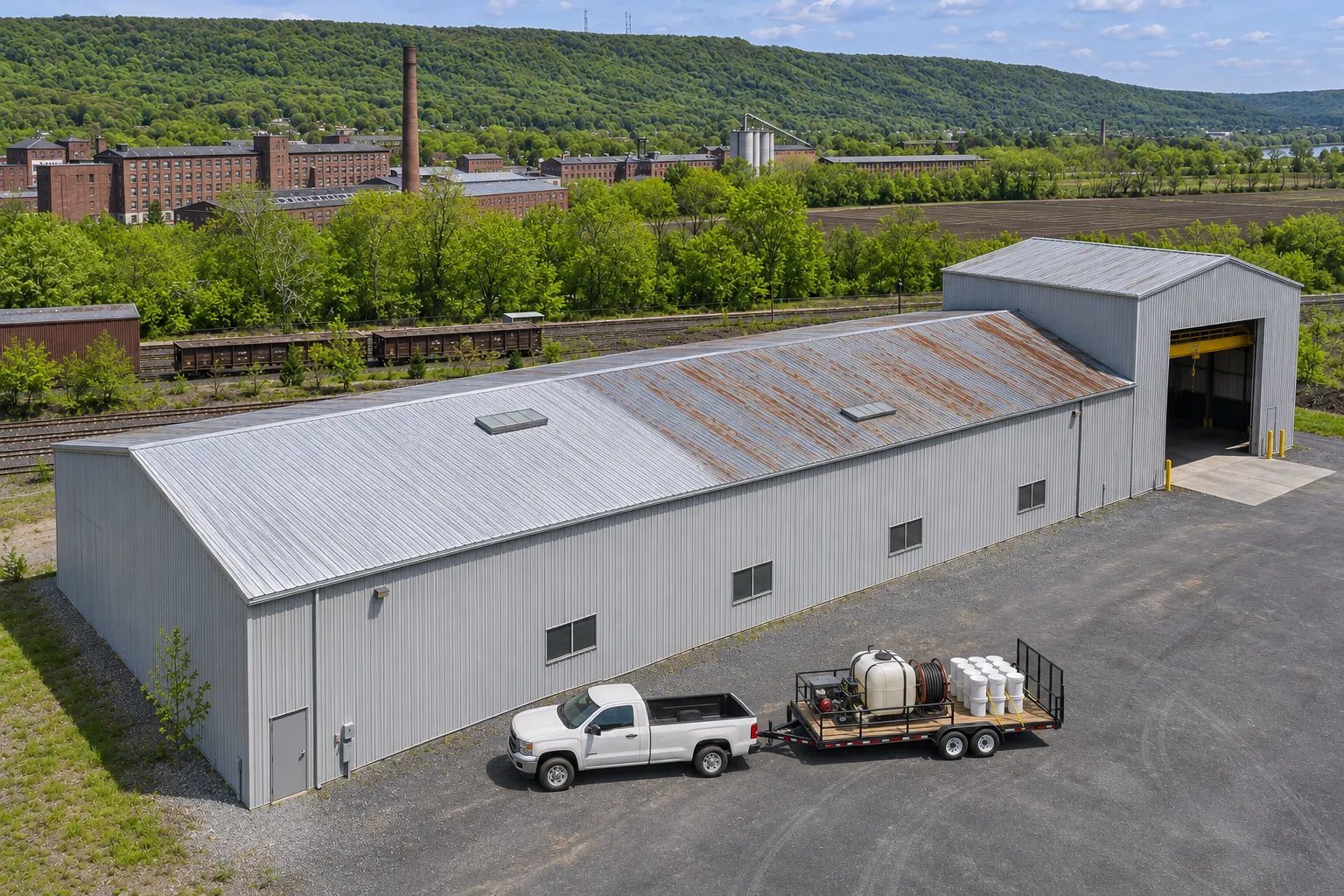
Our main service for exposed-fastener and standing seam roofs on shops, warehouses, and equipment buildings around Reading.
A moisture-tolerant coating for low-slope metal and flat roofs where water lingers after rain.

A water-based coating for sloped metal roofs that shed water quickly and get regular upkeep.

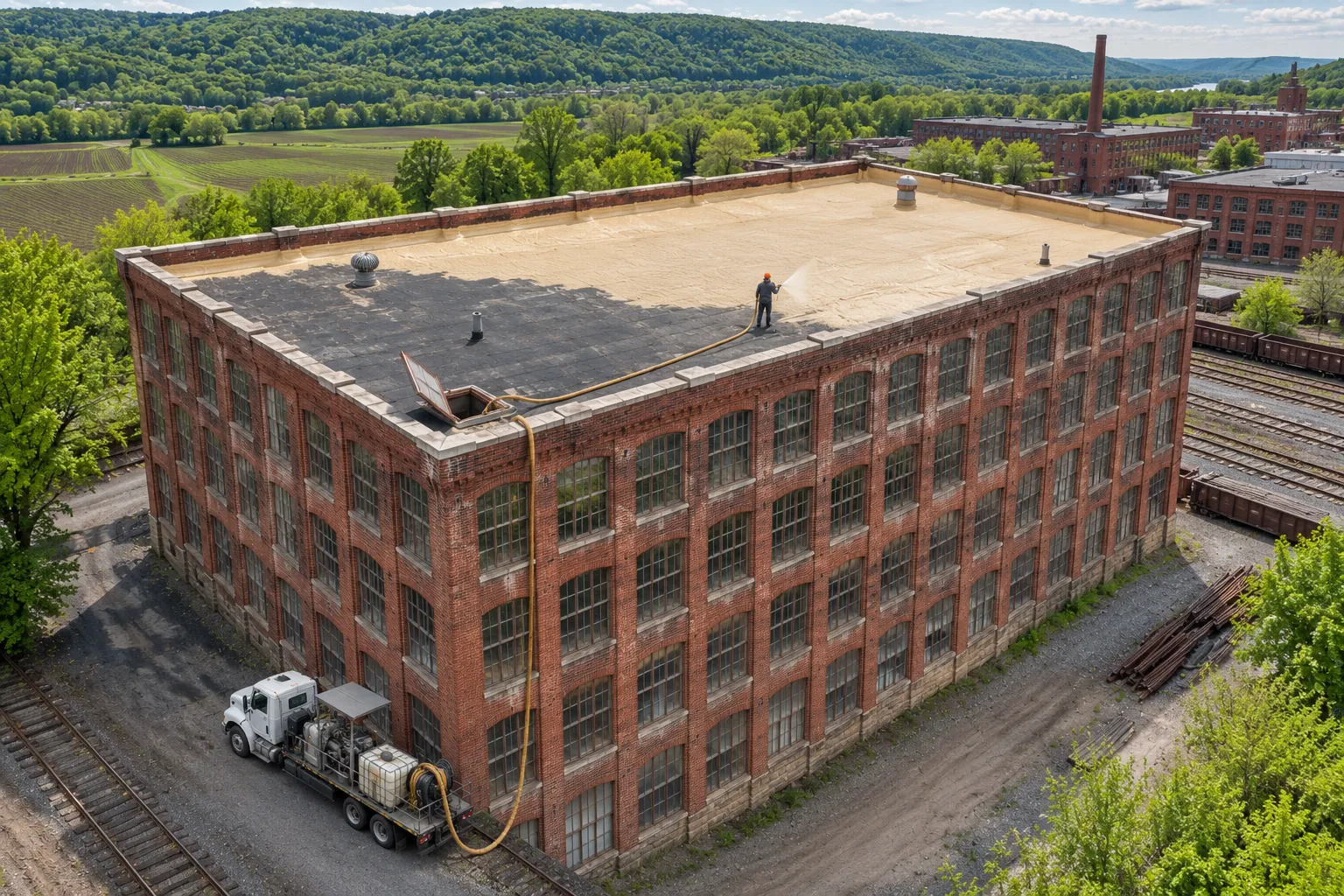
Spray polyurethane foam over metal or flat roofs that need insulation and a continuous surface.

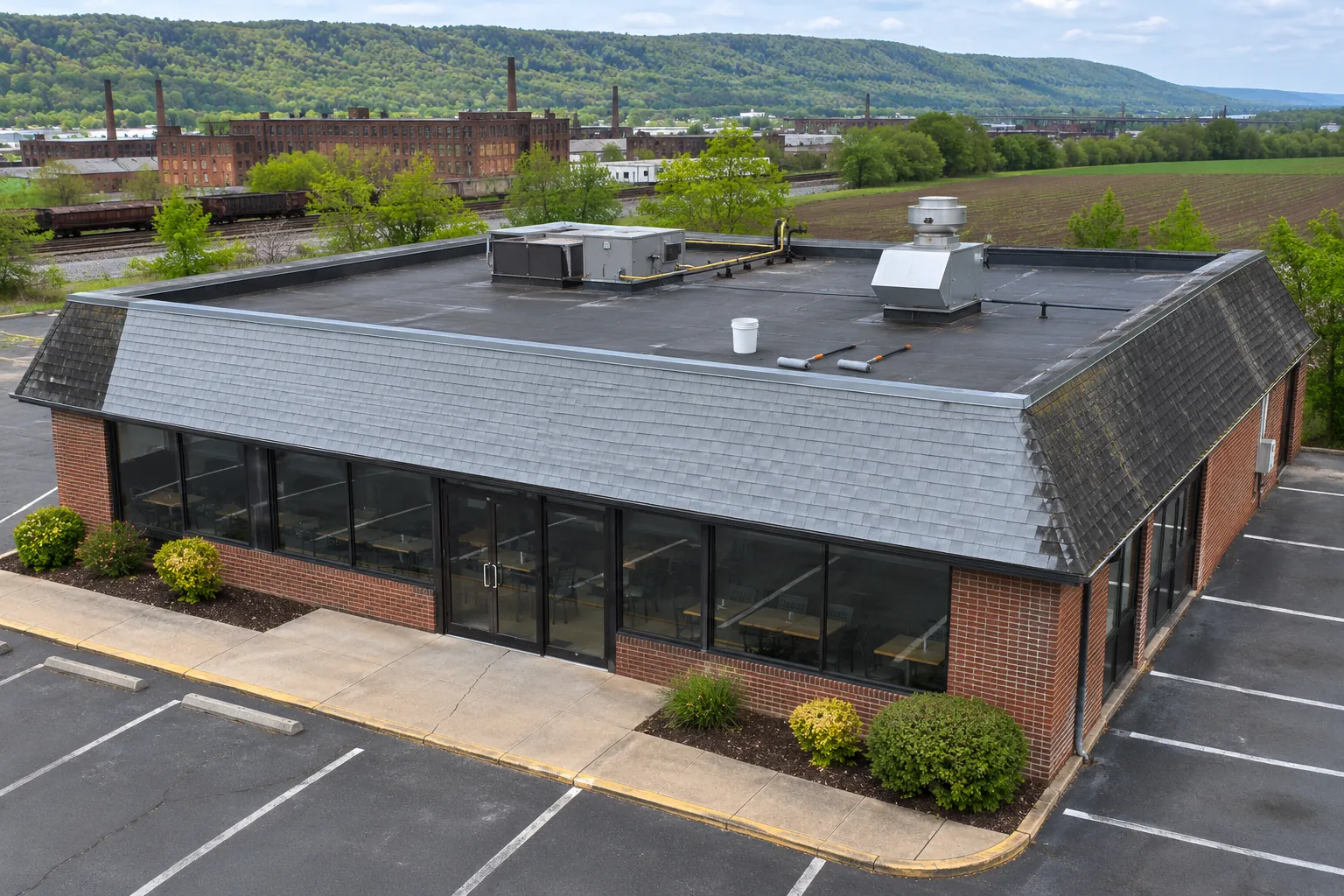
A narrow option for commercial shingle roofs that still lie flat and keep most of their granules.
Catching fastener rust early keeps the repair list short. Send the roof size and a few details, and we will come back with a ballpark range.
Get A Free Ballpark EstimateFour stages, always in this order. Skipping one is how coatings peel or leak within a few seasons.
We walk every panel, test screws by hand, check laps and flashing, and look for wet insulation from inside where we can reach it.
Stripped fasteners get larger screws, rusted-through spots get patched, and open laps are resealed before any coating is mixed.
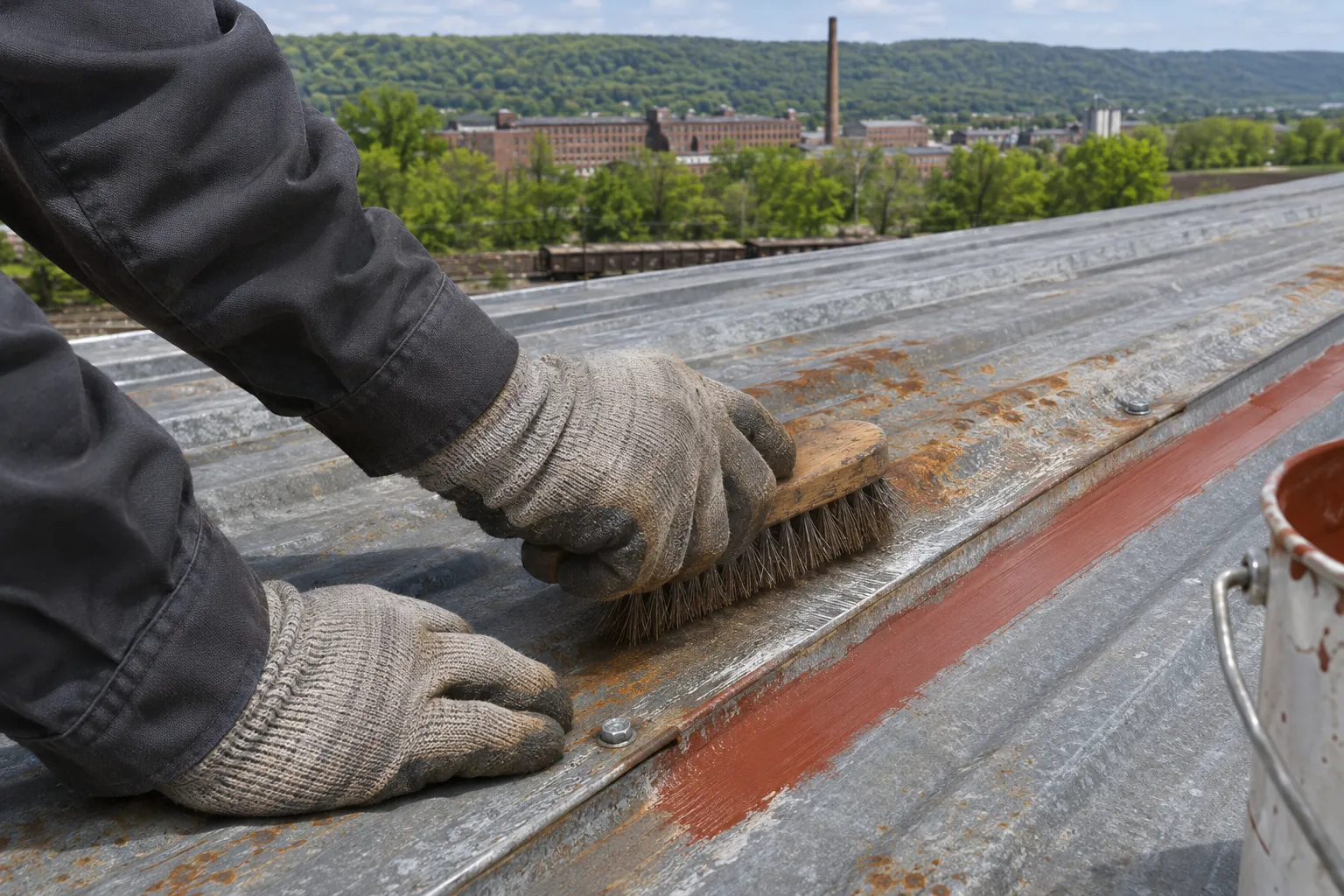
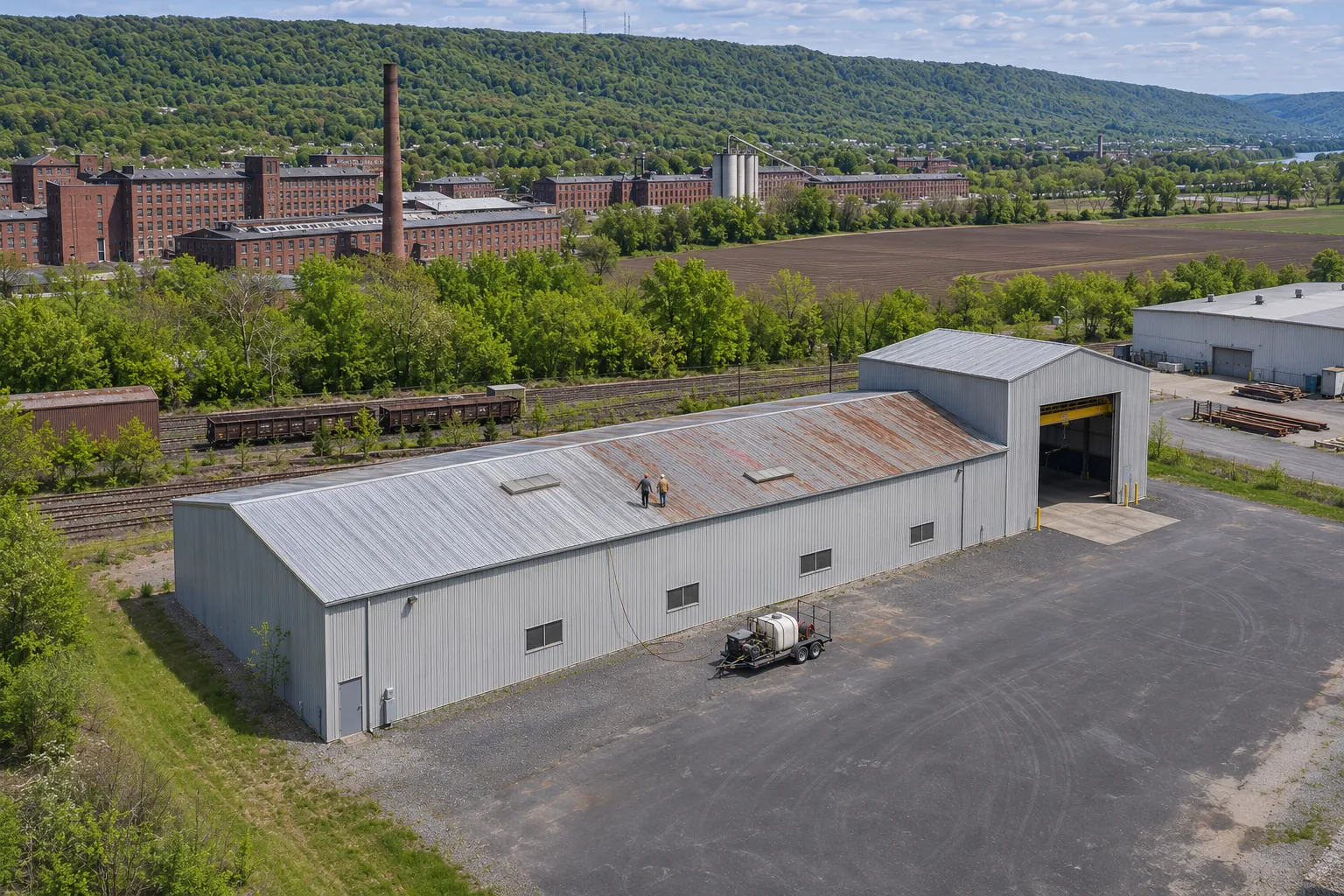
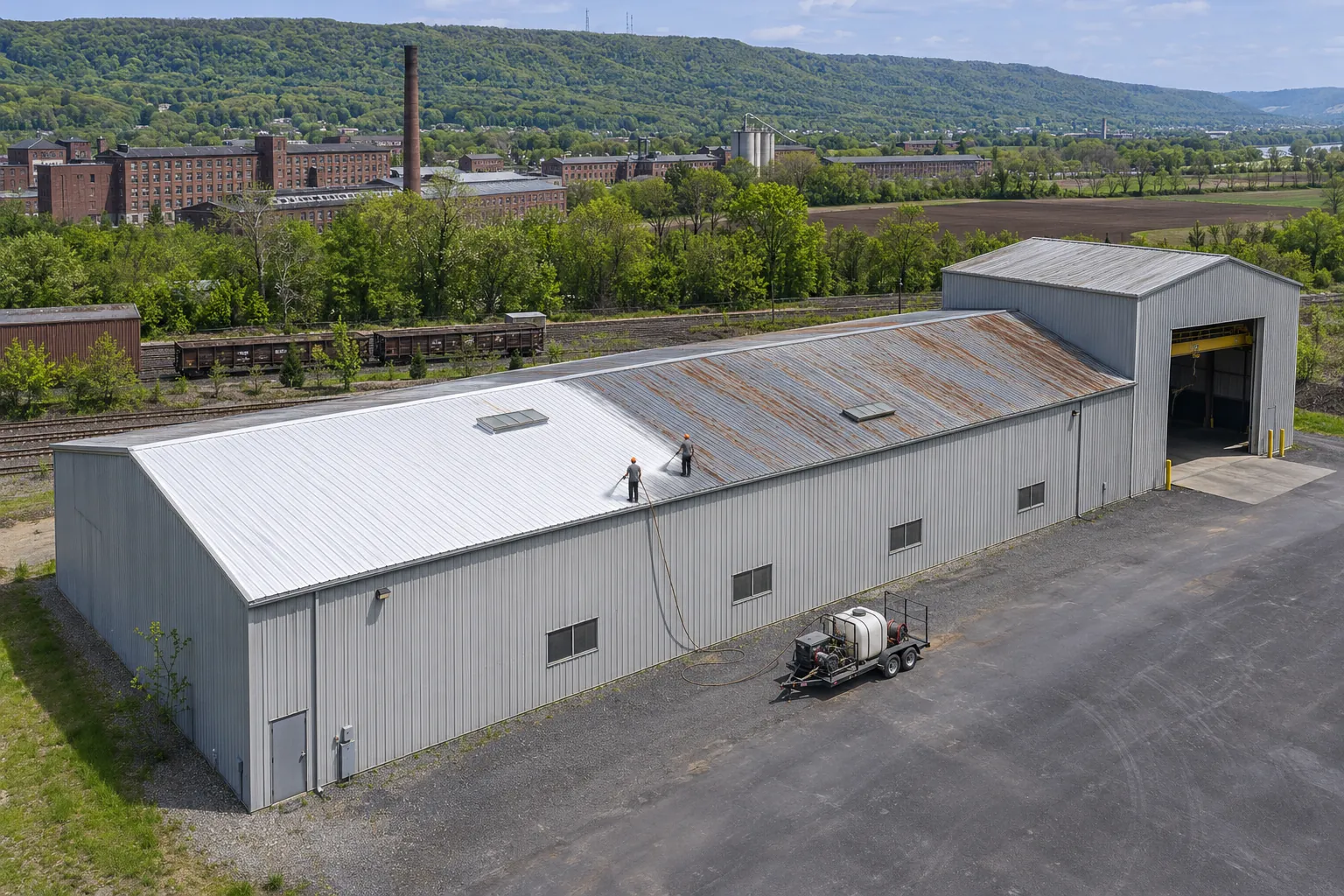
The roof is pressure washed, rust is brushed down to firm steel, and primer goes on wherever bare metal or chalky paint shows.
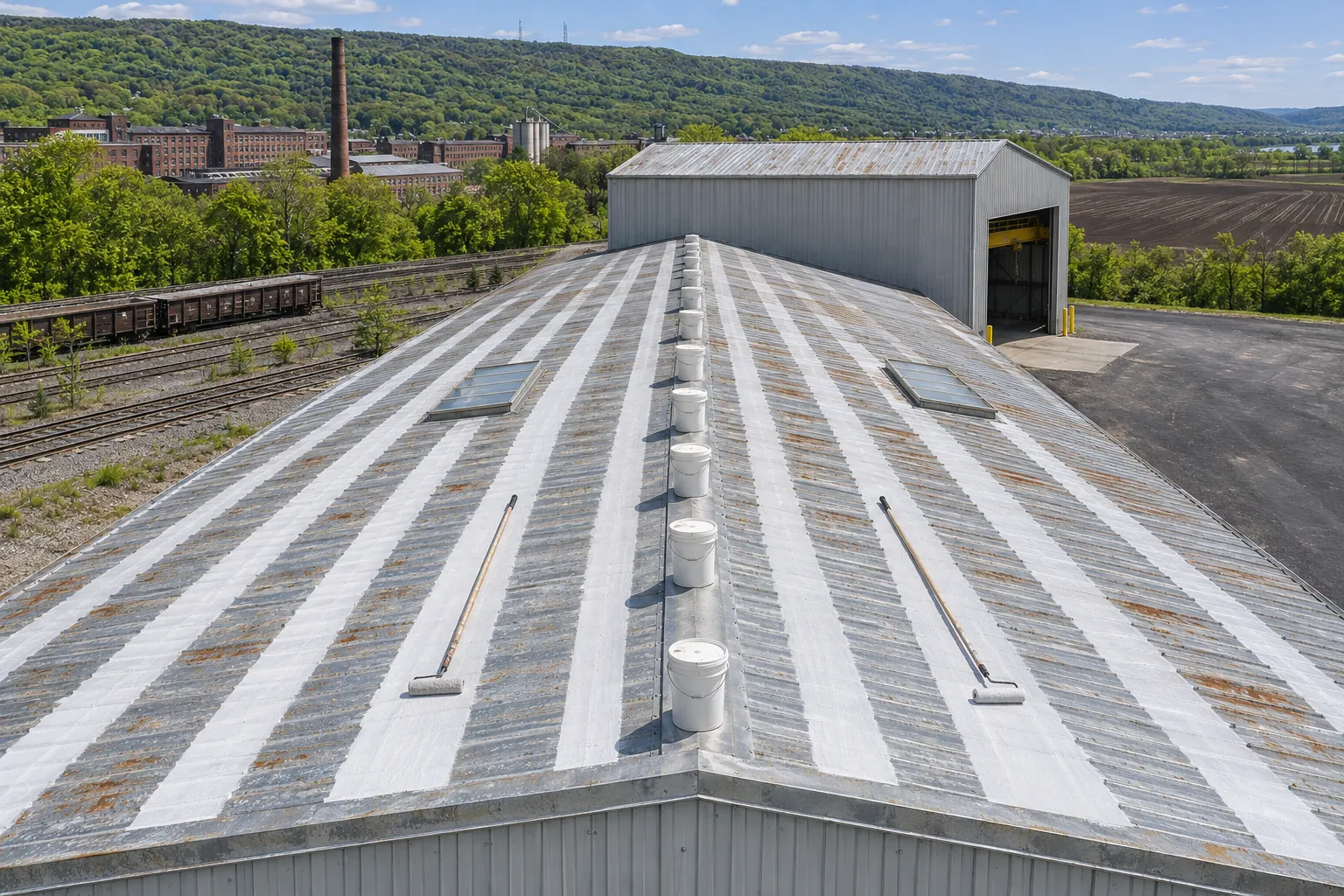
Base and top coats go on at the thickness the product sheet calls for, with extra build over laps, screws, and penetrations.

A coated roof over a solid frame gives owners of older Reading buildings these practical gains.
Coating bridges the side laps and end laps so water has no open joint to follow down the slope.
Each fastener head is primed and covered, which ends the slow drip from cracked washers.
Light-colored coatings reflect more sun than weathered steel, so the panels run cooler on hot afternoons.
Crews work from above, so production floors, offices, and loading docks keep running.
When the film wears thin, a washed roof takes another coat instead of new panels.
Is your building near Reading? We coat commercial metal roofs in the towns below; for anywhere else, call us or send us a message.
Right next door on the west side, where office, retail, and light industrial roofs make up most of our calls.
Wyomissing metal roof coatingSoutheast along the way toward Philadelphia, with properties that often have a main building plus sheds and garages.
Downingtown metal roof coatingA Delaware County borough where we spend extra time on drainage and low spots before choosing a coating.
Brookhaven metal roof coatingFarther southeast in Delaware County, where storm and hail checks come before any coating plan.
Ridley Park metal roof coatingOur farthest regular town, where we often check roofs from underneath to sort condensation from leaks.
Collingdale metal roof coatingYes, when the rust sits on the surface and the steel under it is still firm. We wire-brush or grind it back, prime the bare spots, and coat over that.
Panels with holes or flaking edges get cut out and patched first, because coating over thin steel only hides the damage for a season or two.
It depends on the film thickness, how well it grips, and how much foot traffic and standing water the roof sees. We measure thickness as the coating goes on and mark the areas that wear first, such as walkways to rooftop units.
Washing the roof and touching up worn spots keeps the coating working longer.
The line is the frame and the steel. Coating fits a roof whose panels are firm, whose purlins still hold screws, and whose insulation is mostly dry.
Once rust holes spread across many panels or the attachment is failing, new metal makes more sense, and we will tell you that after the inspection.
Often, yes. We map each old repair first. Patches that are still tight and dry stay in place and get primed. Lifted patches and mismatched sealants come off, and anything wet underneath is opened up.
The repair history tells us which spots need opening rather than another layer on top.
In most shops the rust ring stops at the washer and the screw still grips. We check each fastener by hand, replace the ones that spin, and look under washers for metal loss.
Holes that have widened get a larger screw or a patch, then the heads are primed and coated.
Coating works on the outside of the roof, so it leaves indoor condensation where it is. In older mills we compare where the drips appear with heating, humidity from production, and any gaps at the brick walls.
If rain is getting in at the wall flashing, that gets fixed. If it is condensation, ventilation is the fix.
We plan the work around air intakes, delivery times, and the areas below that need protection. Washing, priming, and coating are scheduled in sections, and spraying stops near intakes while they are running.
Some tasks shift to quieter hours so ovens and packaging lines keep going.

Tell us about the roof, the leaks, and the building. We inspect, repair what has failed, and coat it.